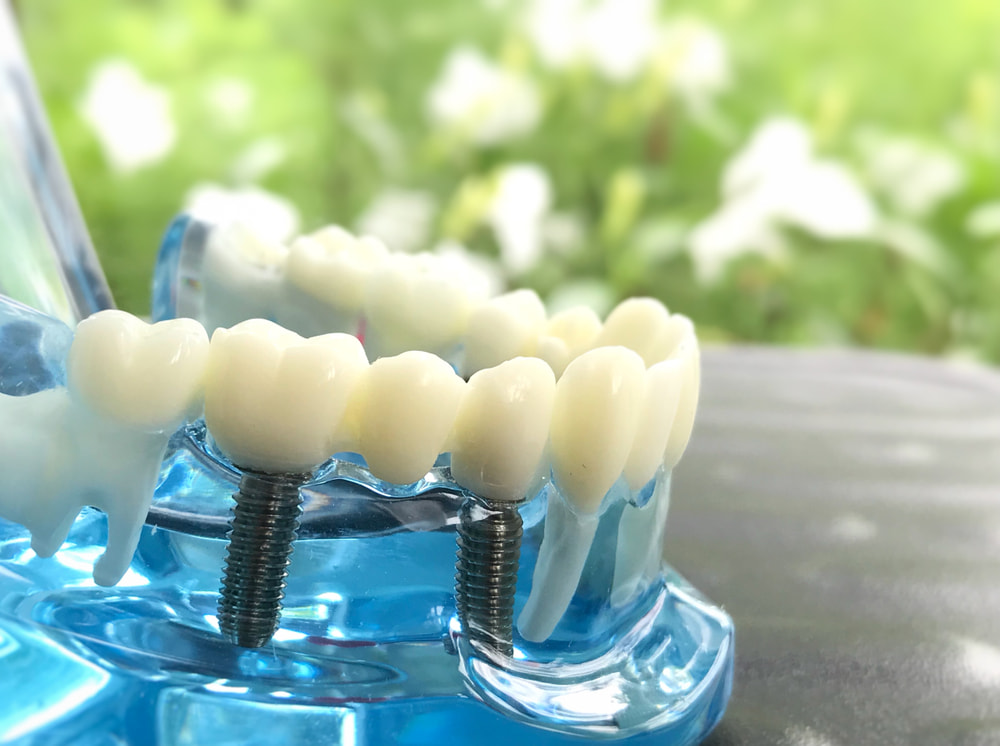
Yes, All-on-4 dental implants in San Diego can be used to restore only the upper or lower arch. You do not automatically need treatment on both jaws simply because one arch requires a full set of replacement teeth. For many patients, single-arch dental implants provide a viable option that allows our oral surgeon and restorative team to replace failing teeth while preserving healthy teeth on the opposite arch.
However, the decision still requires careful planning. Your new implant-supported teeth must meet the opposing teeth comfortably, distribute biting pressure appropriately, and fit the way your jaws move during speaking and chewing. The condition of your remaining teeth, jawbone, gums, and bite will help determine whether treating one arch offers a stable long-term solution. A detailed consultation with our team can clarify what is healthy enough to keep and what your mouth needs to function as one coordinated system in the future.
Can All-on-4 implants replace only your upper or lower teeth?
All-on-4 is a full-arch treatment, but “full arch” refers to one complete row of teeth. An upper restoration replaces teeth across the maxillary arch, while a lower restoration replaces teeth across the mandibular arch. Treatment can therefore be performed on one arch or both, depending on the patient’s needs.
In a typical case, four strategically positioned implants support a full-arch implant-supported bridge across the treated jaw. The restoration is secured to the implants and is not removed at home like a conventional denture. The concept can rehabilitate the upper jaw, lower jaw, or both, with the final design based on the patient’s anatomy and restorative needs.
When might single-arch All-on-4 treatment make sense?
Single-arch treatment may be considered when most or all teeth in one jaw can no longer be predictably restored, while the opposing teeth remain healthy and functional. The need may result from advanced periodontal disease, extensive decay, fractures, repeated dental problems, or long-term tooth loss.
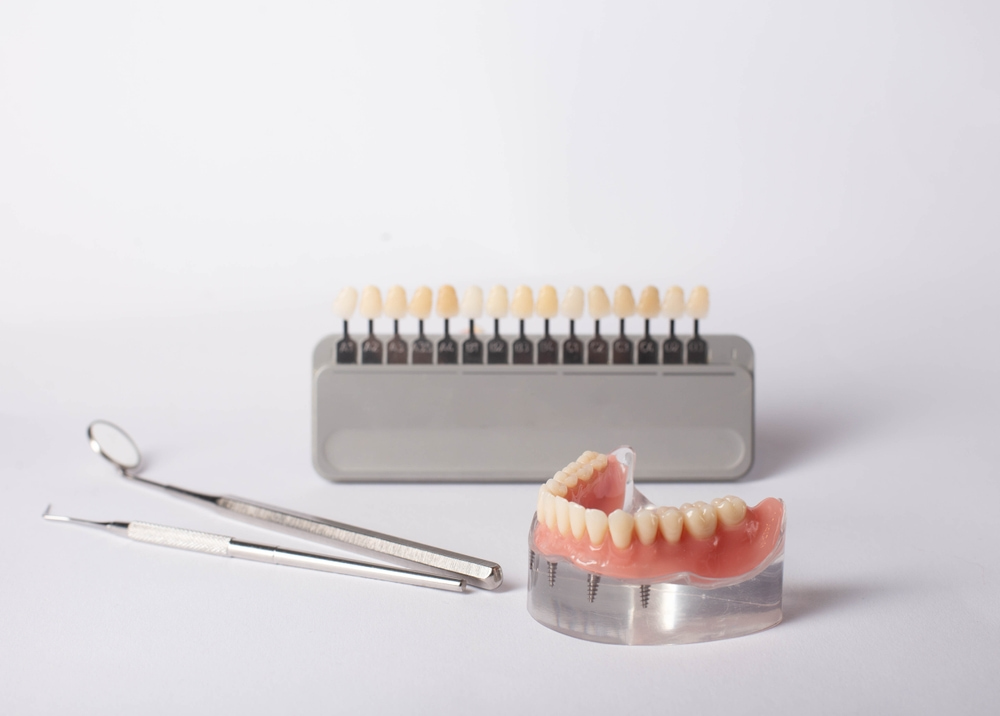 Possible situations include:
- Failing upper teeth with stable natural lower teeth
- Failing lower teeth with healthy upper teeth
- An unstable complete denture on one arch
- Several remaining teeth with a poor prognosis across the same jaw
- Prior tooth loss that has left one arch without dependable chewing support
Crowns, bridges, individual implants, or a removable prosthesis on the opposite arch do not necessarily rule out treatment. What matters is whether they are healthy, properly positioned, and able to function against the new bridge.
Why does the opposite arch matter?
Even when only one arch is being restored, both jaws must be evaluated. Upper and lower teeth contact whenever you bite, chew, and swallow, so the implant bridge has to be designed around the condition and position of the opposing teeth.
Natural teeth have a periodontal ligament that provides sensation and slight movement under pressure. Dental implants are anchored directly in bone and respond to force differently. When an implant-supported bridge meets opposing natural teeth, the bite must avoid placing excessive pressure on one part of the restoration.
Our team may assess:
- Where the upper and lower teeth first contact
- Whether pressure is distributed evenly
- How the jaw moves side to side and forward
- Whether opposing teeth have shifted or over-erupted
- Signs of clenching, grinding, or uneven wear
- Space available for a strong, natural-looking bridge
Careful dental implant bite alignment helps distribute pressure across the bridge and the opposing teeth, reducing unnecessary stress on individual parts of the restoration.
Minor care on the opposite arch may sometimes improve the result. This could involve adjusting a high contact, treating gum disease, or restoring a damaged tooth. It does not automatically mean the entire arch needs replacement.
Can you keep healthy teeth in the opposite arch?
Healthy natural teeth are generally worth preserving when they have good bone support, manageable restorations, and a favorable outlook. Receiving All-on-4 implants in one jaw does not create a reason to remove sound teeth from the other.
However, a tooth that is still present is not always healthy enough to keep. Deep decay, root fractures, advanced bone loss, or recurring infection may affect its prognosis. Other heavily restored teeth may remain stable for years.
Our team will carefully evaluate each tooth and explain what can reasonably be preserved. This helps avoid removing useful teeth unnecessarily or planning the new bridge around teeth unlikely to remain dependable.
How is candidacy for one-arch treatment evaluated?
The evaluation involves more than counting missing teeth. Our surgeon and restorative dentist need to assess the bone that will support the implants, the surrounding tissues, and the way the completed bridge will fit into your bite. Treatment planning may include:
A clinical examination
We check the remaining teeth, gums, jaw relationship, smile line, lip support, and available space. We also look for mobility, infection, tenderness, and signs of excessive biting force.
Dental imaging
A CBCT scan for dental implants provides three-dimensional views of bone volume, bone shape, and nearby anatomical structures. It helps the surgeon determine possible implant positions and identify areas requiring additional planning.
Scans & bite records
Digital scans, impressions, photographs, and bite records guide the size and position of the replacement teeth. They are especially important in a single-arch case because the bridge must coordinate with the existing opposing teeth.
A health review
Medical conditions, medications, smoking, oral hygiene, and teeth grinding may influence healing and maintenance. They do not always prevent treatment, but they can affect the recommendations and precautions.
 Will the new arch match your natural teeth?
 Will the new arch match your natural teeth?
A well-planned single-arch restoration should complement the teeth you are keeping. Our team can help you select the tooth shape, shade, length, and arrangement with your natural teeth and overall smile in mind.
An exact match is not always the best target. Natural teeth may show wear, discoloration, or older restorations, while the new bridge is created as one coordinated set. The aim is a balanced smile that suits your face without making either arch look disconnected.
Mention any plans for whitening or restorative dental work before the final bridge is made. Implant restorations do not whiten like natural enamel, so planning the treatment sequence can help create a more consistent result.
What if the other arch develops problems later?
Treating one arch now does not prevent care for the opposite arch later. Natural teeth and existing dental work can change over time, so regular examinations remain important.
If a natural tooth later needs a crown or replacement, that treatment should maintain appropriate contact with the implant bridge. We’ll help you make a decision that looks beyond the day of surgery and accounts for the long-term outlook of the opposite arch. If those teeth eventually become unsalvageable, another full-arch restoration may be considered.
Who should I contact for natural-looking All-on-4 dental implants in San Diego, CA?
Whether you’re located near Balboa Park or farther north in the San Diego area, Temecula Center for Dental Implants is your trusted dental clinic, known for gentle care, thoughtful treatment guidance, and attentive support throughout recovery.
Choosing All-on-4 treatment for one arch starts with understanding how your current teeth, bite, bone structure, and long-term oral health fit together. At Temecula Center for Dental Implants, our team takes the time to evaluate the entire mouth and explain whether a single-arch restoration is the right path for you.
During your consultation, we can also discuss how treatment differs between the upper and lower jaw, what to expect if a screw-access filling becomes loose or falls out, and why small bone fragments sometimes appear during healing. If you have questions, don’t hesitate to reach out directly to schedule a personalized evaluation. Call us today!