Finding a small opening in your All-on-4 bridge can be alarming, especially if the surface felt completely smooth the day before. In many cases, what has fallen out is the material used to close a screw-access hole rather than a part of your full-arch implants in San Diego. Loss or deterioration of this closure material is a recognized complication of screw-retained implant restorations.
That usually does not require an emergency dental visit when the bridge remains secure, and you have no pain, swelling, or other concerning symptoms. However, the opening should not simply be ignored. Food and debris can collect inside it, and your dental team may want to check the underlying screw before replacing the material. Knowing what came out, what lies underneath, and how to protect the area can make the situation much less stressful.
What exactly is the filling over an All-on-4 screw hole?
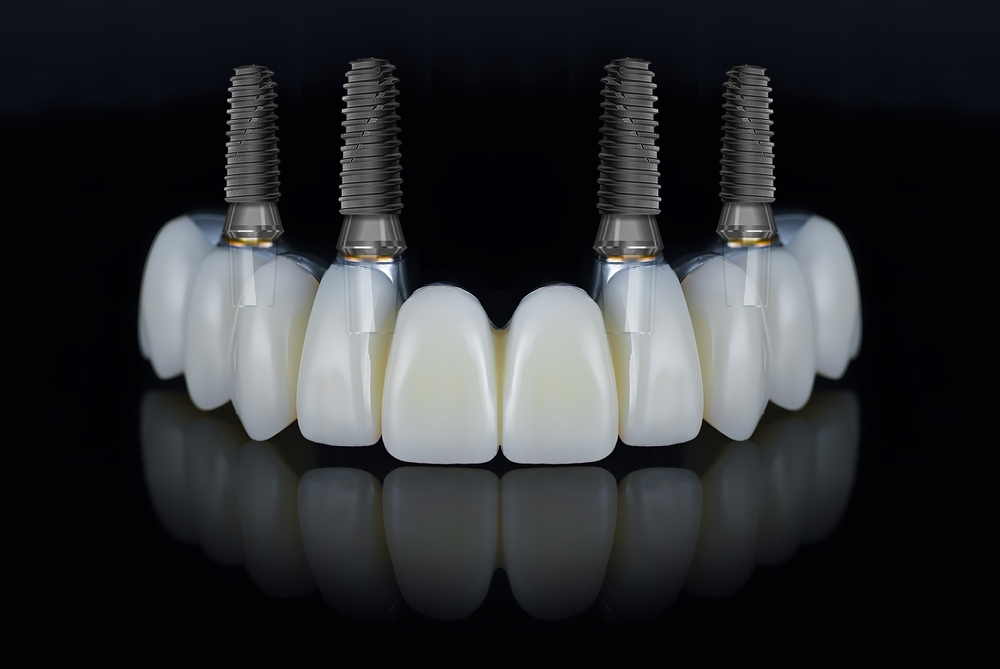
All-on-4 bridges are commonly attached to the underlying implant components with prosthetic screws. To reach those screws, the restoration has small access channels. After the bridge is secured, our dentist closes each dental implant access hole so the chewing surface feels more like the rest of the restoration.
The exact materials vary. In many permanent screw-retained restorations, we may place polytetrafluoroethylene, or PTFE tape for dental implants, deeper in the channel to protect the screw head, then cover the opening with a tooth-colored composite resin filling. Some of our temporary All-on-4 restorations may use materials that are easier to remove because the bridge will need to come off during later stages of treatment.
This design keeps the screw accessible. If the restoration ever needs maintenance, our dentist can remove the filling material and reach the screw without destroying the bridge.
Does a missing screw-hole filling mean my implant is exposed?
Usually, no. If only the filling material has come out, the dental implant itself is not suddenly exposed inside your mouth. The implant sits within the jawbone, while the access channel leads toward the prosthetic screw that helps secure the bridge.
You may see or feel:
- A small round opening in the bridge
- A shallow indentation where the filling used to sit
- Material deeper inside the access channel
- A hard surface farther down that may relate to the prosthetic components
Try not to determine what you are seeing by poking into the opening. The depth and appearance of screw-access channels vary, and your dental team can tell whether only the surface filling is missing or whether something else needs attention.
Is a lost All-on-4 screw-hole filling an emergency?
In many cases, a missing filling by itself is not a dental emergency. If your bridge feels completely stable and you do not have pain, swelling, drainage, or an injury, you can generally contact your implant provider for instructions and arrange an appropriate appointment.
The situation changes if the restoration itself feels loose. A filling falling out and prosthetic screw loosening are two different problems. A loose screw can affect how forces travel through the bridge and may require more prompt attention.
 Contact your dental team promptly if you notice:
- Movement or rocking of the bridge
- A clicking sensation when biting
- New pain or significant tenderness
- Swelling around an implant site
- Bleeding or drainage that concerns you
- A chipped or fractured area around the opening
- A screw or component that appears to have come out
What should you avoid doing when the filling falls out?
The safest approach is to leave the access channel alone until your dental team tells you how they want it managed. Attempts to repair the opening at home can make professional evaluation more difficult or introduce materials that were never designed for use inside an implant restoration.
Avoid:
- Picking inside the opening with a toothpick, pin, or dental tool
- Placing household glue or adhesive into the channel
- Packing the hole with gum or other improvised materials
- Scraping at material that remains deeper inside
- Directing a high-pressure water flosser tip into the access hole
- Repeatedly pressing the area with your fingernail or tongue
Why can sticky foods pull out screw-access fillings?
Sticky and chewy foods can place traction on the material that closes a screw-access channel. Caramel, taffy, gummy candy, and similar foods can grip the surface as you chew and pull away from the restoration. If the filling has already worn around its edges, that repeated force may make it easier to dislodge.
Food is not the only possible factor, and other factors may include:
- Deteriorated access-hole closure material
- Normal wear from chewing
- A shallow screw-access channel
- Repeated force from grinding or clenching
- Differences between temporary and permanent filling materials
- Bite contact directly over the restored opening
- Wear around the edge of the composite
Should you change what you eat until the opening is refilled?
A cautious approach makes sense, particularly if you are still wearing a temporary bridge or are early in the healing process. You should follow the diet restrictions your implant surgeon has already given you, since those instructions take priority over general advice.
Until your dental team evaluates the opening, it is reasonable to avoid very sticky foods that could pull at remaining material or become packed into the channel. Extremely hard foods may also place unnecessary stress on a temporary restoration. Try to choose foods that fit comfortably within your current stage of recovery and chew according to the instructions you received after surgery.
When should the screw-access opening be refilled?
Call our team if you notice that the filling has come out. We will help determine how soon we should examine and reseal the access channel based on whether you have temporary or permanent teeth, how the bridge feels, and whether you have any other symptoms.
Replacing the material is generally more involved than simply dropping a new filling into the opening. We usually recommend checking the prosthetic screw and protecting the screw head before restoring the access channel. PTFE is commonly used beneath composite because it can protect the screw while still allowing the dentist to retrieve it during future maintenance.
Our dentist may also examine your bite and the condition of the surrounding restoration, particularly if your filling has fallen out more than once.
Why should repeated screw-hole filling loss be checked?
 A filling that dislodges once can simply reflect wear or the material used in a temporary restoration. Repeated loss deserves a closer look because our team may need to determine whether the access channel is unusually shallow, whether the bite repeatedly contacts that area, or whether the closure material needs a different approach.
Research has shown that access-hole fillings can experience marginal deterioration and material loss over time, which is one reason why we evaluate both the filling and the restoration beneath it rather than treating every missing plug in exactly the same way.
If you keep losing material from the same location, don’t forget to mention how often it happens and whether it tends to follow certain foods, cleaning methods, or chewing patterns. That information can help us decide what needs to change when the opening is sealed again.
Which dental office specializes in biocompatible full-arch implants in San Diego, CA?
If you’re near Chollas Lake Park or elsewhere in the San Diego area, Temecula Center for Dental Implants provides specialized evaluation and care for patients with All-on-4 and other full-arch restorations. A lost screw-hole filling is often manageable, but checking the bridge helps rule out problems with the underlying screw or surrounding restoration.
We can also explain when All-on-4 treatment may be limited to a single arch, why upper and lower cases require different planning, and what bone spurs can mean during implant healing.
If you notice a missing filling, movement, discomfort, or another unexpected change in your restoration, contact us to arrange an evaluation. Our caring team will carefully examine the area, answer all your questions, and recommend the appropriate next step for protecting your full-arch restoration. Let’s talk today!