Losing one tooth and losing most of your teeth are very different problems. A single gap near the back of your mouth might only change how you chew on one side. When teeth are missing or failing across an entire jaw, you may find yourself cutting food into tiny pieces or avoiding certain meals altogether.
If you’re considering full arch implants in Murrieta, it helps to know that implant treatment isn’t one-size-fits-all. Depending on your needs, a plan can range from a single titanium post to a complete set of fixed teeth. That range exists because the right plan depends on how many teeth need replacing, how much healthy bone remains, and the condition of your existing teeth.
Below, we explain how replacing one tooth differs from replacing a whole arch, so you can see which situation sounds most like yours.
How is replacing one missing tooth different from replacing an entire arch?
The biggest difference is scale. Replacing one tooth means rebuilding a single root and crown. Replacing every tooth in a jaw means designing a whole new bite.
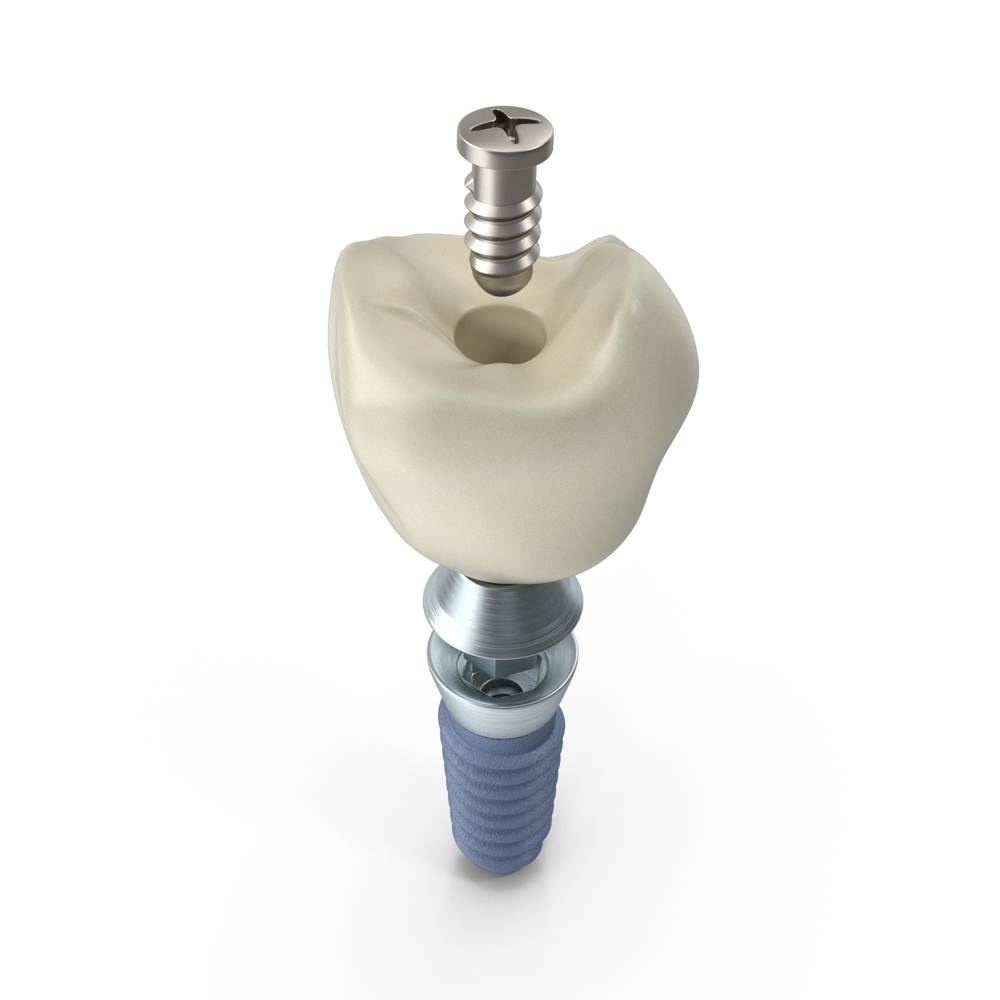
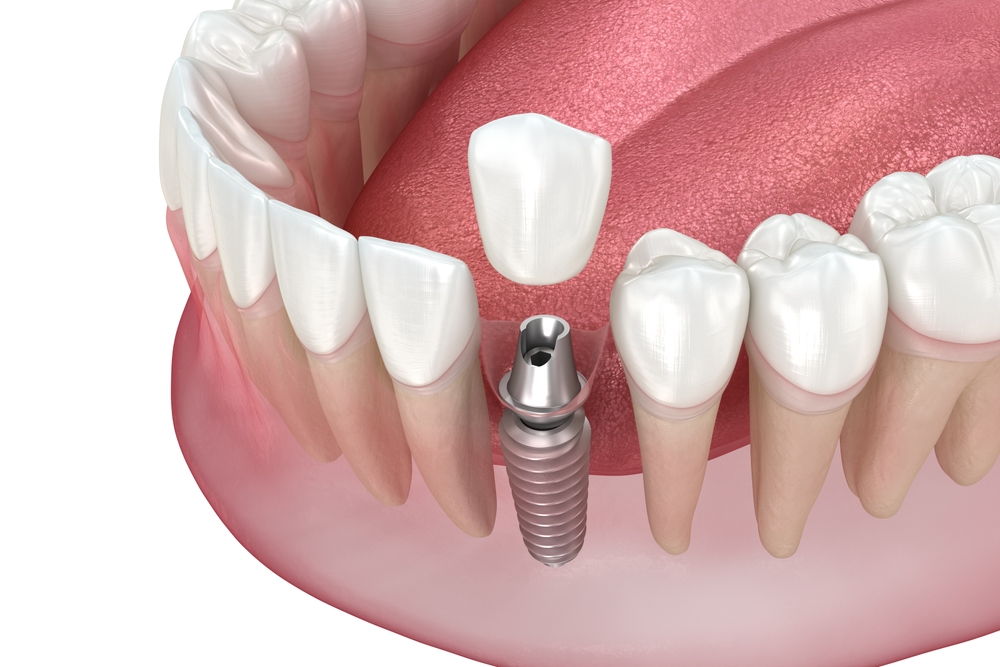
For a single tooth, a titanium post is placed in the jawbone to act as the root. Once the bone has bonded to it, an abutment and a custom crown are attached on top. The neighboring teeth are left untouched.
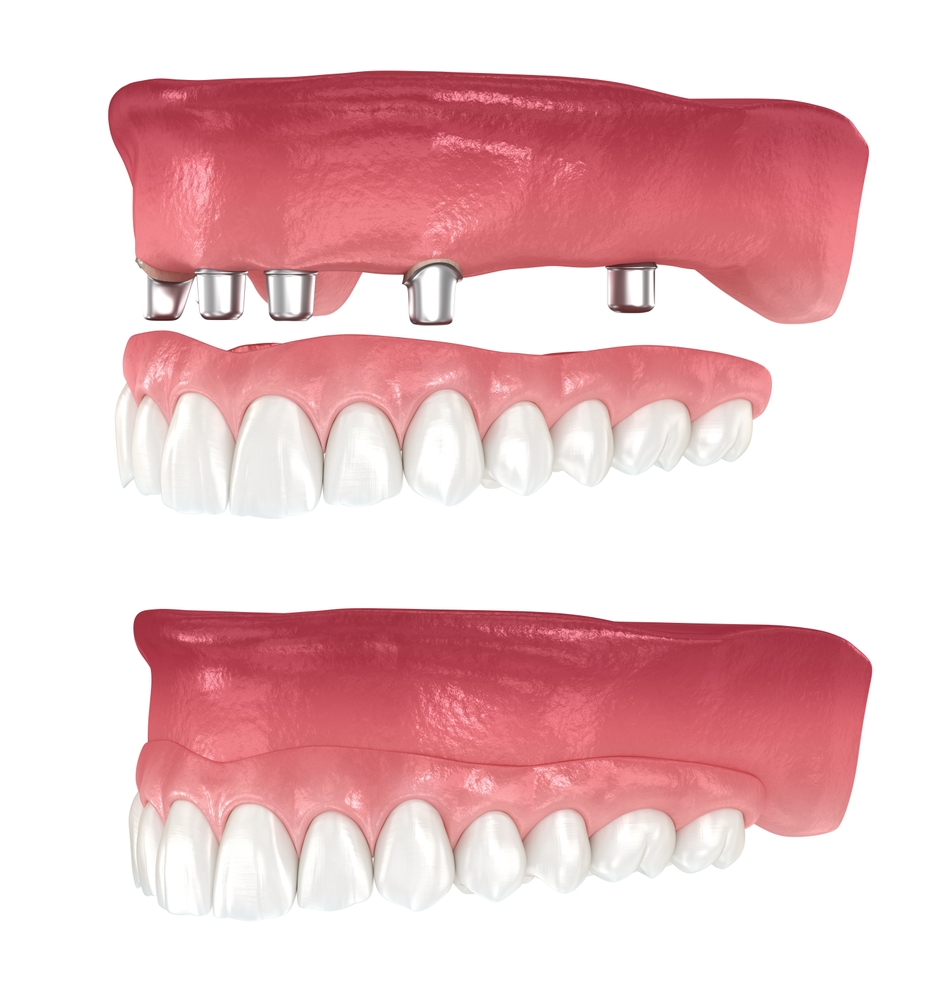
Restoring a full upper or lower jaw works differently. A small group of posts supports a fixed bridge of roughly 10 to 12 teeth, and that bridge also has to support your lips and cheeks.
Here’s how the two typically compare:
- Surgery: Placing one post can take about 30 minutes when there’s enough bone. A full-arch case often combines extractions and several posts in a single visit.
- Temporary teeth: With one missing tooth, you may wear a small temporary replacement or simply heal with a gap. Full-arch patients often leave with a fixed temporary bridge the same day.
- Upkeep: A single crown is brushed and flossed much like a natural tooth. A full bridge needs careful cleaning underneath.
Because a full mouth affects how your whole mouth functions, replacement options are planned as one connected system rather than tooth by tooth.
When are individual dental implants used?
Individual posts are generally recommended when the surrounding teeth are healthy and only one tooth, or a few scattered teeth, need replacing. A dental implant for one tooth closes an isolated gap without shaving down the neighbors, which a traditional bridge usually requires.
Common situations include:
- A tooth knocked out or broken in a fall or sports injury
- A cracked root or a tooth that failed after a root canal
- A back tooth lost to deep decay
- A permanent tooth that never developed
Even for one gap, the details can change depending on where the missing tooth sits. A front tooth carries high cosmetic demands and often has thinner bone, while an upper molar may sit close to the sinus.
Timing matters, too. If a tooth has been gone for a while, the bone there can shrink, so a graft may be needed first.
When might All-on-4, All-on-6, or All-on-X be considered?
These treatments are usually considered when most or all of the teeth in one jaw are missing or failing, often after advanced gum disease, widespread decay, or years with a slipping denture.
What sets these options apart?
All-on-4 uses four posts, All-on-6 uses six, and All-on-X covers whatever count your anatomy calls for. The name itself hints at the setup, since the number after the dash tells you how many posts hold the bridge. Six may be recommended when softer upper-jaw bone or a strong bite calls for extra support.
The back posts are often tilted so they can use the stronger bone toward the front of the jaw while avoiding the sinus or nerve. That can reduce the need for grafting, and it’s why the positioning and angle of each post have such a big effect on stability.
What are the trade-offs?
Anyone weighing full arch dental implants pros and cons should look at both sides.
Potential benefits:
- The teeth stay fixed, so there’s no nightly removal or adhesive
- Fewer posts are needed than replacing each tooth one by one
- Temporary teeth can often be attached on the day of surgery
- The posts stimulate the jawbone, which can help slow shrinkage
Possible drawbacks:
- Remaining teeth in that jaw are usually removed, even some that still work
- The final bridge is placed only after several months of healing
- Uncontrolled health conditions or smoking can affect healing
How does the number of missing teeth change implant planning?
As more teeth need replacing, the goal shifts from filling a gap to rebuilding how your bite works:
- One missing tooth: a single post topped with a crown
- Two or three missing teeth side by side: often two posts supporting a short bridge
- Several gaps spread around the mouth: a mix of single crowns and short bridges
- Most or all teeth in one jaw: a fixed bridge anchored by a handful of posts
The same thinking applies to single arch vs double arch implants. Restoring one jaw means matching the new teeth to the natural teeth they’ll bite against. Treating both lets the entire bite be designed at once.
The count isn’t the only factor. Keeping a few weak teeth might seem conservative, but if they’re likely to fail soon, replacing them now may spare you another surgery later. A cone beam scan also maps bone volume and nerve and sinus positions, so the plan reflects your actual anatomy.
Who offers quality full arch implants near me in Murrieta?
You can count on Temecula Center for Dental Implants, where board-certified oral surgeon Dr. Dmitry Tsvetov plans every case, from one missing tooth to All-on-4 or All-on-6. Your free consultation includes X-rays and a cone beam scan, so you’ll know how much bone you have to work with before committing to anything. Anesthesia options range from local numbing to being completely asleep. If you live near the Santa Rosa Plateau Ecological Reserve or elsewhere in the area, our Temecula office is a short drive away. Reach out today to book your visit!