What are the Advantages of All-on-4 Compared to Snap-In Dentures?

01/27/2026

All-on-4 and snap-in dentures both aim to solve the same problem: replacing several missing teeth with a comfortable and natural-looking solution. But this is where the similarities end, and snap-ins always lose when compared to high-quality dental implants in Vista, CA. 

If you’ve worn traditional dentures, you probably know all about their downsides, from sore spots and discomfort to a constant dread of whether they will move when eating or talking. If we take all this into account, it becomes clear that All-on-4 implants represent a serious upgrade that can transform your quality of life.

Looking for an all-on-4 vs snap-in dentures comparison? Well, we think that this is not a relevant dilemma, and the experiences of our patients and peers seem to back us up. In today’s article, we aim to settle this once and for all and show all the advantages of dental implants compared to snap-in dentures.

What is the difference between All-on-4 & traditional dentures?

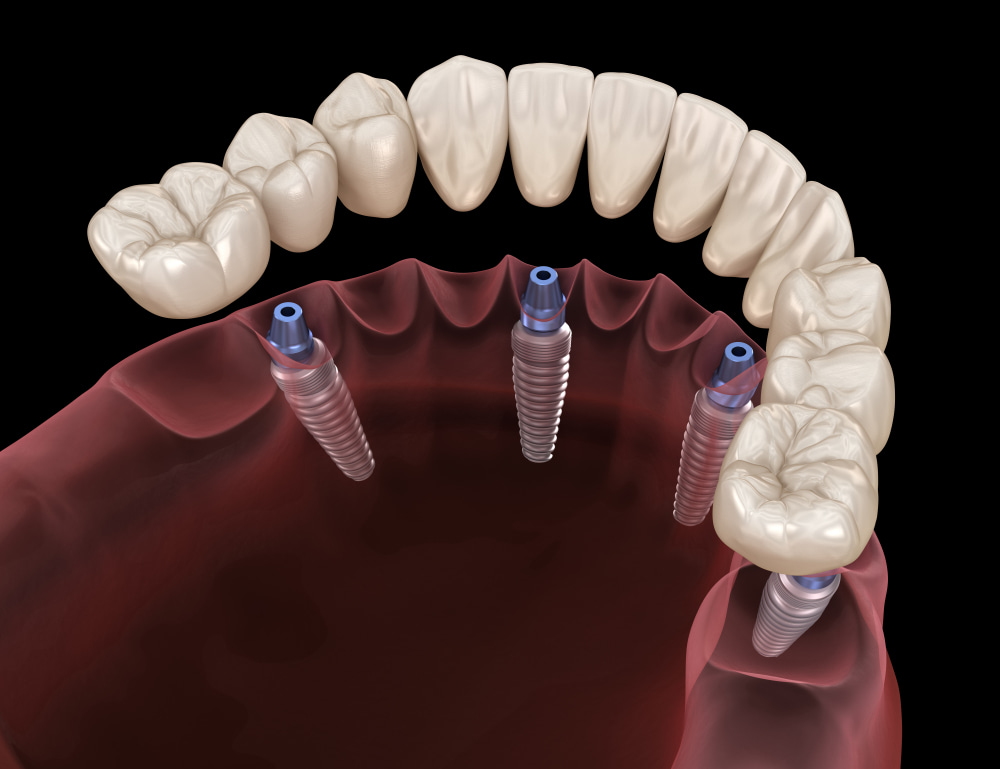
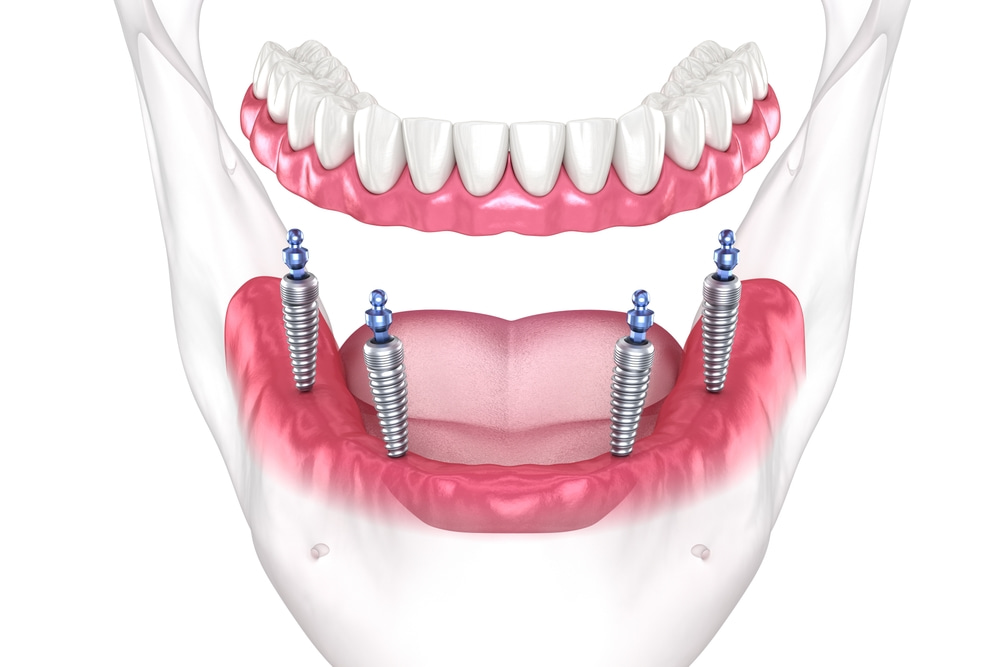
Traditional dentures rest on gums and rely on suction power, adhesives, and the shape of the ridge to stay in place. All-on-4, on the other hand, offers a full arch restoration by inserting 4 angled implants directly into the jawbone. While snap-ins can lead to slipping and discomfort, and the jawbone keeps changing over time, dental implants offer a stable foundation that doesn’t exert so much pressure on your gum tissue.

Are All-on-Four implants better than dentures?

Besides being anchored more firmly and built to last a lifetime, All-on-4 offers numerous other advantages that can significantly elevate your daily experience and simplify your routine. Whether you’re interested in a more natural look and feel, stronger bite force when eating firm foods, or you’re tired of taking out and cleaning your dentures, the reasons to choose All-on-4 are many

Here’s how and why dental implants stand apart:

1. A truly fixed solution

As we’ve mentioned already, maybe the most noticeable difference is that All-on-4 implants are fixed and not meant to be removed. That means you don’t have to take them out at night, snap them off for cleaning, or worry about the base shifting under excess pressure. This makes biting and chewing feel more natural, strong, and comfortable. 

2. Better stability = more chewing force
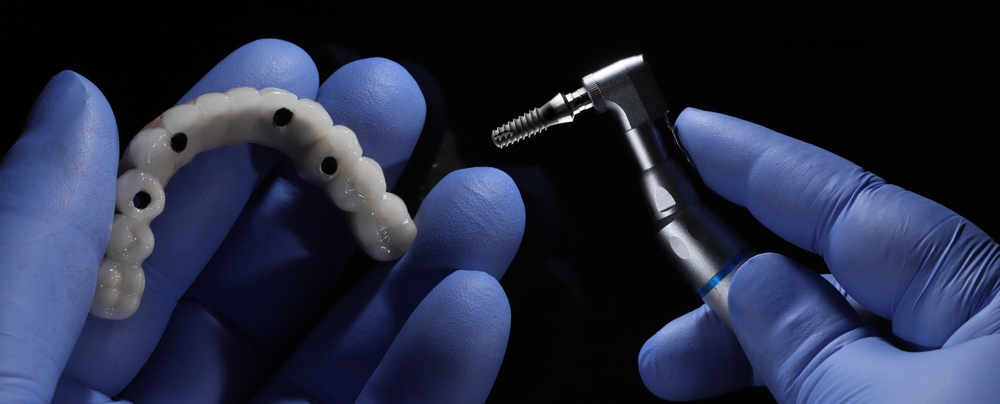
What is the difference between All-on-4 & traditional denturesSnap-in dentures sit still against soft gum tissue, and no matter how well crafted, the snap mechanism allows small amounts of movement during chewing. While that movement may seem minor, it’s enough to cause sore spots, trap food, and lead to persistent snap-in dentures gum irritation issues over time. All this is not an issue with dental implants. All-on-4 distributes bite force equally through the implants to reduce pressure on the gums and make the bite much more forceful while feeling natural. This advantage of dental implants becomes even more pronounced when eating steak or crunchy foods with All-on-4.

3. A lot less maintenance & wear

Snap-ins use attachments that wear down over time. While these parts can be tightened, relined, or replaced, they just add to more visits to the dentist that we all want to avoid. All-on-4 dental implants are not maintenance-free, but neither are your natural teeth. In fact, upkeep on dental implants is in many ways similar to what you would do for your teeth. This means regular cleaning, good hygiene habits, and occasional checkups at the dentist.

4. Improves jawbone health

One of the biggest drawbacks of traditional dentures is that they don’t stimulate the jawbone, and it will slowly start to deteriorate. Since dentures rest on gums, your bone starts feeling useless and continues shrinking over time. This can change your facial shape, reduce bridge height, and affect your appearance and oral health. On the other hand, All-on-4 implants are placed to maximize bite force and transfer load distribution through the implants onto your jawbone while you’re eating. This will preserve your facial structure and oral wellbeing.

5. Fewer pressure points & less irritation

Speaking of force, constant pressuring of your gum tissue can create friction. If the base is not perfectly aligned with the anatomy of your mouth, sore spots can start appearing as early as the adaptation period. Relining will help, but it’s a cycle you wish to avoid. With All-on-4, the prosthesis is implant-supported, so patients feel less rubbing and more comfort with every bite. They also feel and look more natural while you’re talking. This is a significant benefit that greatly improves your daily life and leads to less discomfort and everyday concerns.

6. Mimics the look of your natural teeth

One of the advantages that snap-in dentures can’t match is the aesthetic appearance. Some patients don’t like handling their dentures, feel awkward displaying them during social interactions, and even lose confidence or self-esteem when their peers become aware that they have snap-ins. Since All-on-4 dental implants are anchored and you don’t have to remove them, they don’t feel or look like prosthetics. In addition, with modern techniques and high-quality materials on offer at our clinic, we can design implants that match the shape, size, and tone of your natural teeth so you won’t have to worry about their appearance or attracting the wrong kind of attention while socializing. 

Where can I get biocompatible dental implants in Vista, CA?
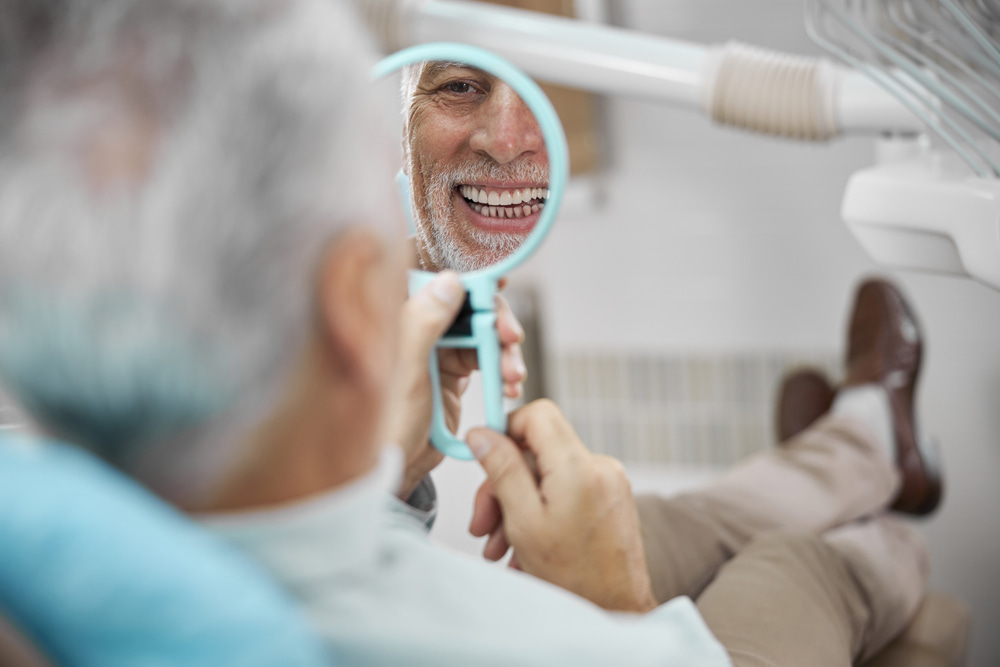
biocompatible dental implants in Vista, CAAre you looking to get rid of your clunky snap-ins? Do you have sore spots you just can’t ignore anymore? Are you tired of the maintenance and hassle that come with dentures? Come to Temecula Center for Dental Implants, and we’ll give you a new lease of life with the latest and the best that oral medicine has to offer—natural-looking All-on-4 dental implants.

As the leading oral health clinic in your area, from Rancho Guajome Adobe on the north to the south side and beyond the town limits, we’re here to help you anyway we can. If you have questions or concerns that need answering, we’re glad to offer help and guidance. Want to learn what to expect from our free implants consultation, what is osseointegration and why it matters, or which medical conditions disqualify you from All-on-4? Just go ahead and call or book your free initial assessment today!
What to Expect During Your Initial All-on-4 Implants Consultation

01/27/2026

Every visit to the dentist can feel a little intimidating, and a consultation for All-on-4 dentures in Vista, CA, is no different. This is especially true if you’re visiting the dental office for the first time or you tend to feel anxious before medical appointments in general. Fear of the unknown is one of the major drivers of dental anxiety, so we’ve decided to introduce much-needed familiarity in today’s post. We’ll outline the process to help our patients shed the stress from the unexpected.

If you’re one of those who’ve been putting off a visit to our office because you’re afraid of what happens behind the scenes, today’s article is the best way to become familiar with the process and what you can expect from the leading specialists in our cutting-edge dental clinic. Let’s see what happens when you walk through our door for your initial consultation.

How much do dentist consultations cost?

While a typical dental implant consultation cost usually ranges between $80 and $400, at Temecula Center for Dental Implants, you’ll get one completely FREE. Some dental clinics bundle the cost into a patient exam or just add it to the final bill without mentioning it from the start. We, on the other hand, believe in full transparency and offer all our new patients free initial evaluations to get the process started professionally and without delay. 

How long does a dental consultation take?

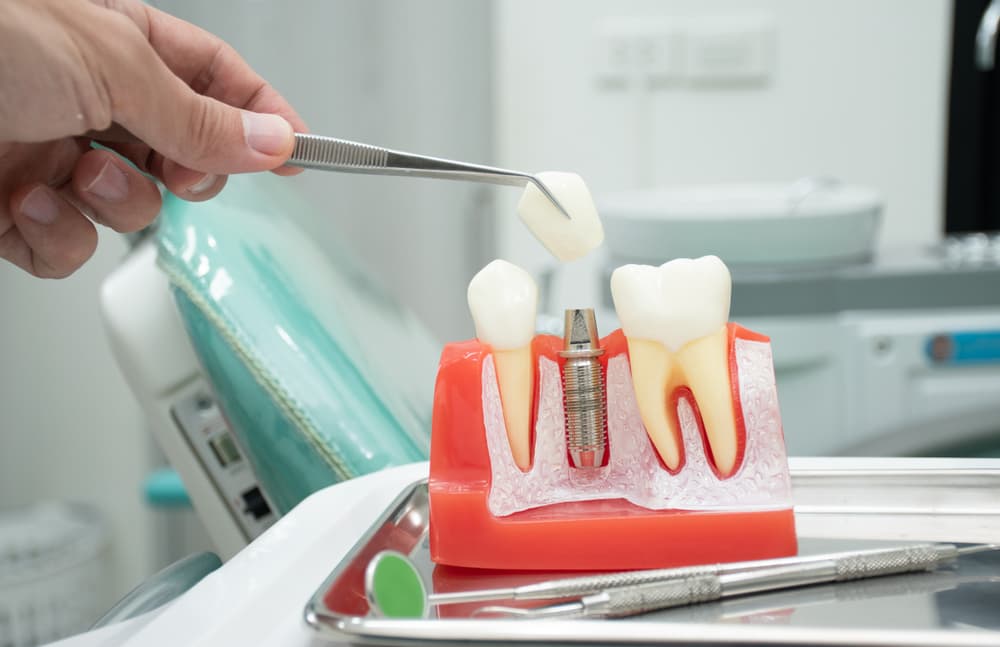
What happens during an implant consultationOk, now that we’ve addressed the consultation fee, or lack thereof in our case, it’s time to move on to the All-on-4 consultation timeline and the next steps. Most evaluations take around 30 minutes, but they can extend to a full hour, depending on the case and the patient’s medical history. Consultations for dental implants typically include 3D imaging, diagnostics, and a discussion with the patient. X-rays or a cone beam scan can add to the overall consultation timeline. Keep in mind that your assessment may take longer if you have gum concerns or a complex medical history.

What happens during an implant consultation?

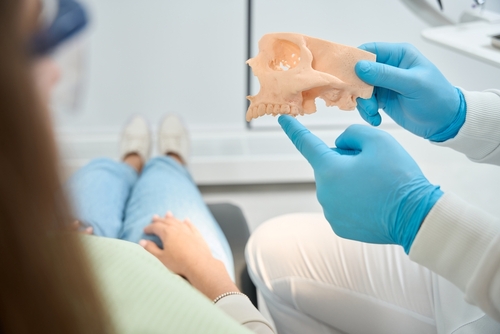
The whole point of your initial visit is to get to know your medical record and learn about your dental health history, so we can determine whether you’re the right candidate for All-on-4 dental implants. The more we know about your condition, the better we’re able to match the right treatment plan with your needs. We create personalized plans based on the specific condition of our patients, so getting to know you is a crucial part of matching you with the right treatment procedure. 

Below is what you can expect, step by step:

1. Thorough examination of teeth, gums & bone structure

We start with a hands-on evaluation of your oral health. It’s not enough to look at gaps where your teeth are missing. We have to check the nearby tissue and teeth, inspect your bite, and look for signs of inflammation, gum disease, or infection. Bone structure is also important because All-on-4 implants go directly into the jaw, so we have to make sure you have enough bone density to support the procedure.

2. Detailed X-ray & cone beam scan

Once we’ve gotten to know your oral health, it’s time to take a look at how things stand underneath the surface. X-rays will show your teeth roots, bone density, and potential hidden issues like infections. A cone beam CT scan provides a detailed 3D image of your oral anatomy, helping us plan precise implant placement. CT scans provide greater detail, enabling us to plan a guided placement and avoid critical anatomical structures like nerves and sinuses during implantation.

3. One-on-one talk about your medical record

Since All-on-4 treatment is a surgical procedure, we need to know more about your overall health and medical history. This helps us understand how your body will heal, detect any potential infection risks, and plan a safe surgical procedure. Dental history is important too. Past gum disease, frequent cavities, teeth grinding, and previous dental work will all influence how you respond to treatment and the best way to proceed. All this information helps us plan and create a treatment plan that minimizes the risk of complications and leads to a smooth recovery.

4. Talk about the ongoing treatments & meds

This is one step that some underestimate, but we never take lightly. Certain medications can affect bleeding and healing, so we need to have a full picture of any treatment you’re currently taking. For example, if you’re on blood thinners, we’ll need to consult your physician. Some osteoporosis medications can influence bone healing, which is a big part of successful dental implantation. Don’t forget to mention supplements or any other over-the-counter products you’re taking because they can matter too.

5. Address your questions & fears

If you feel anxiety about All-on-4 implants and dental procedures in general, or need some questions answered, now is the time to open up to our team. We prioritize patients’ comfort at our clinic, so we’ll do everything we can to make you feel at ease at Temecula Center for Dental Implants. We’ll outline sedation options, talk you through the after-surgical procedures, and introduce the basics of aftercare.

6. Help you make an informed decision

We want to place all the information you need to make the best treatment choice, which not only addresses your immediate issues but takes your long-term wellbeing into account. We’ll discuss the All-on-4 treatment, what makes you a good candidate, and why we think it’s the best option for you. Once we have your All-on-4 treatment plan explained, we’ll delve into finer details, including the number of visits, the overall treatment duration, and potential risks in your case, to help you get the full picture of the process you’re embarking on.

7. A look at the aftercare & recovery 

While most people only want to know how long the recovery takes and what they can eat, we’ll make sure to explore your aftercare in greater detail. We’ll address the first few days after surgery, introduce the basics of osseointegration, and tell you how to manage swelling, pain, and what to do in case of bleeding. Our specialists will also give you instructions on oral hygiene, which activities to avoid and for how long, and talk about the diet and foods that are recommended to avoid exerting pressure on the surgical area.

Which oral clinic specializes in high-quality All-on-4 dentures in Vista, CA?

high-quality All-on-4 dentures in Vista, CA

Whether you’re located close to Alta Vista Botanical Gardens, some other part of town, or anywhere else in the nearby areas, the Temecula Center for Dental Implants is your top-rated team of oral health experts. With experienced maxillofacial surgeons, the latest technologies that aid treatment, and a caring support staff, we’ll go above and beyond to make the process stress-free.

If you want to discuss the advantages of All-on-4 compared to classic dentures, learn about osseointegration and its role in implants, or discover who isn’t a good candidate for dental implants, feel free to turn to us directly and we’ll provide all the answers you need.

Time to stop approaching every meal and get-together with your friends and family with anxiety. Schedule your free consultation at our state-of-the-art dental clinic today!

6 Benefits of All-on-4 Dental Implants on Jawbone Health

01/08/2026

Losing teeth is a significant change that affects much more than just your smile. Your jawbone needs the steady pressure of chewing to remain strong and retain its original shape. Without that stimulation, the bone shrinks over time. This can affect your bite, the way dentures fit, and even your overall facial appearance.

High-quality All-on-4 implants in San Marcos, CA, are designed to replace a full arch of teeth using four carefully placed dental implants to create a secure foundation that feels far more natural than traditional dentures. While most people think of implants in terms of improved confidence and comfort in everyday situations, they play a key role in preserving oral health, and specifically protect the jawbone density and shape.

In today’s article, we look at why bone loss tends to follow tooth loss and explore the benefits of all-on-4 dental implants for jawbone preservation to illustrate why All-on-4 is a superior solution for healthier bone and oral wellbeing than traditional dentures.

Can missing teeth cause jaw problems?

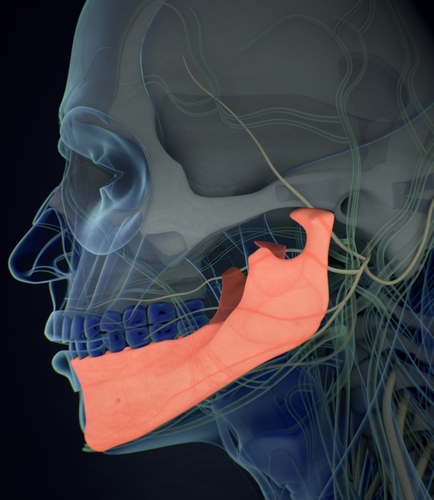
Can missing teeth cause jaw problemsLike most things in a human organism, the jawbone isn’t static—it’s a living tissue. It’s constantly adjusting and remodeling itself in response to our habits and how we use it. Natural teeth transfer chewing force into the bone: ‘Keep this bone strong, we still need and use it every day.’
Once teeth are gone, that pressure and root-based stimulation disappear. Our body interprets this as a loss of function and starts breaking down the bone because it’s no longer needed.

If left untreated, the bone loss adds up and creates a domino effect. The ridge that used to hold the teeth becomes thinner, narrower, and shorter. This, in turn, causes changes to the gumline, and the lower part of your face starts looking ‘collapsed’ due to a lack of support.

In practical terms, less bone makes all future dental treatments more complicated because it gives your dentist less structure to work with.

The main point is this: you shouldn’t wait too long to replace missing teeth, or you risk serious jawbone issues and general oral health complications. 

Do regular dentures cause bone loss?

Traditional dentures sit on top of gums and rely on suction, adhesives, and the dental ridge to stay in place. While they can improve appearance and help with eating and speaking, they don’t replace tooth roots. This means they can’t mimic your original teeth and deliver the kind of pressure and stimulation your jawbone needs to stay strong and healthy.

This is the main reason why people who wear dentures for a long time notice that the fit changes as the years go by. Dentures start feeling loose and uncomfortable, in some cases, slipping and requiring frequent relines. Many patients then find themselves in a vicious cycle: bone shrinks, dentures fit worsens, and adjustments become routine.

How do all-on-4 implants prevent jawbone loss?

Instead of placing an implant for every missing tooth, All-on-4 implants are strategically placed in key areas of the mandible to support a full set of fixed replacement teeth. The front pair of implants is usually placed more vertically, while the back pair is angled to maximize contact with the available bone for greater stability.

Because implants support a firmly fixed arch of replacement teeth, they don’t sit on gums like removable dentures do. This not only feels more like natural teeth and ensures a stable bite, but it also provides enough pressure and stimulation to the jawbone to preserve its structural integrity.

What are the key benefits of All-on-4 dental implants?

Placement, design, and function introduce numerous benefits of all-on-4 dental implants for jawbone preservation compared to traditional dentures. All-on-4 also avoids many of the issues associated with traditional dentures, like instability, sore spots, and lack of structural support for facial tissues.

1. Restores the stimulation your jawbone needs

If we compare all-on-4 vs dentures for maintaining jawbone density, one of the biggest benefits is biomechanical. Since implants are anchored directly in the bone, the pressure is transferred into the jaw when you chew. This mimics the normal function of natural teeth and keeps your bone active and supported. 

While no treatment can guarantee ‘zero’ bone change over time, compared to removable dentures and leaving space where a tooth once was, implants significantly slow the rate of bone loss.

2. Helps preserve the alveolar ridge

After tooth loss, the alveolar ridge (the part of the jawbone that holds teeth) can shrink significantly. All-on-4 dental implants help stop bone resorption by providing anchored support that preserves ridge integrity and gives the bone something to ‘work around.’

Keeping the ridge healthier isn’t just about appearance. It also supports the gums better and contributes to increased bite stability over time.

3. Reduces constant pressure on gums & ridge

Since removable dentures rely on soft tissue and the alveolar ridge for support, it can lead to denture compression from dentures pressing too hard. With firmly fixed All-on-4’s, there is no danger of this. Since it’s attached to implants, it doesn’t press down on the gums during chewing.

The difference is less rubbing, fewer sore spots, less discomfort, and more ease in day-to-day situations, especially for people struggling with denture movement.

4. Provides better bite stability

When your dentures feel loose, it’s hard to enjoy care-free meals and chew normally. In those cases, people tend to compensate and avoid certain foods, chew on one side, or reduce their bite force. This is not only frustrating as it affects your diet and prevents you from enjoying your favorite foods, but it also leads to an uneven strain in the jaw, which brings us back to the problem of an unstimulated jawbone that leads to bone loss.

Built for stability, a strong bite, and more natural chewing patterns, All-on-4 dental implants help stop bone resorption. When chewing feels normal, it becomes more symmetrical and delivers consistent, healthy pressure to the bone.

5. Supports facial structure over time

Many people are surprised to learn just how much jawbone loss can change their facial appearance. As the bone shrinks, the lower face starts losing support. The distance between the nose and chin shortens and the lips lose support as the bone loses volume. While this is alarming, it’s not simply an aesthetic concern. It’s also a structural problem tied to jawbone density and overall health.

All-on-4 implants prevent jawbone loss by preserving the underlying support that keeps the face looking fuller and healthier. Restored bite height plays a role in avoiding the ‘sunken’ appearance that can happen to individuals wearing dentures.

6. Prevents the need for bone grafting

When tooth loss is left untreated, progressive bone loss can limit future implant placement options. Once their jawbone deteriorates beyond a certain point, patients may require bone grafting to rebuild volume before dental implants can be placed. All-on-4 is often placed strategically to maximize available bone density and eliminate the need for grafting.

That being said, timing matters, so it’s highly recommended that you contact our specialists as soon as tooth loss occurs. The sooner missing teeth are replaced with All-on-4 implants, the more bone you’ll be able to preserve.

Who should I call for reliable All-on-4 implants in San Marcos, CA?

Do regular dentures cause bone lossIf you’re facing tooth loss or you want to upgrade your traditional dentures, All-on-4 dental implants are a highly effective treatment that can improve your quality of life and confidence. Weighing the advantages of All-on-4 vs dentures for maintaining jawbone density, it’s clear that dental implants offer numerous significant benefits. As the leading oral health clinic in North County, the Temecula Center for Dental Implants combines the rich experience of renowned maxillofacial surgeons with cutting-edge technology. Our compassionate doctors and attentive supporting staff will do everything in their power to outline your options, help you choose the best solution for your long-term health, and support you through every step of the treatment.

If you’re not sure if you’re a good candidate for All-on-4, want to inquire about the serious risk of dental tourism, or have any questions about All-on-4 dental implants, we’ll gladly help you make sense of all this and so much more.

To elevate your day-to-day experience and indulge in your favorite meals with comfort and a care-free smile, book your appointment today!

7 Main Reasons Why You Should Avoid Dental Implant Tourism

01/08/2026

Seen from the vantage point of an average American, it’s easy to see why dental tourism seems so tempting. A quick search turns up glossy ads, with dramatic ‘before and after’ photos, and a promise of exotic locations and overnight stays in unexplored territories. Compared to an average bill for teeth-in-a-day in San Marcos, CA, the advertised prices often seem too good to ignore. The idea of flying somewhere, solving your dental issues, and bringing home a new smile in addition to a few mementos and a story or two to tell, sure feels like an alluring prospect.

But All-on-4 dental implants aren’t something you buy from a tourist brochure. They are serious medical procedures that come with a healing phase, follow-up care, and occasional routine checkups attached. And when, and it’s often when and not if, something goes wrong with your cheap foreign implants, the distance becomes an unbridgeable problem.

In this blog, we delve deeper into the risks of getting dental implants abroad instead of placing their trust in a highly esteemed dental implants specialist backed by experience, top support staff, and the latest medical tools. Let’s sink our teeth into what to know before traveling to another country for dental implants!

What are the dangers of dental tourism?

While most people see the shiny side of dental tourism in an ad, they rarely, if ever, hear about the hidden costs and risks accompanying such procedures. The realization often comes too late when they are already dealing with dental implant tourism complications, unclear warranties, or a local dentist who’s struggling to fix someone else’s botched job. Below are the 10 most common reasons implant tourism can backfire, often with serious consequences.

What are the dangers of dental tourism1. Dental implant procedure is not a one-time appointment
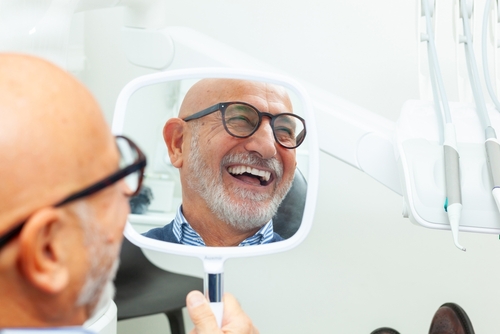
While dental implants are often marketed as a quick makeover with a one-time visit to the dentist, the reality is a bit more complicated than that. Placing the implants takes less than a day, so in that sense, teeth-in-a-day is not a deceiving marketing strategy but a clever one. However, the entire treatment process entails more than just implant insertion. 

High-quality approaches that consider patients’ long-term well-being require medical assessment, planning, surgery, healing, and final restoration. Knowing you can count on your doctor’s support and guidance through all these stages is a crucial aspect of care-free treatment and smooth recovery.

2. Follow-up care isn’t optional—it’s a crucial step

Speaking of smooth recovery, follow-up visits are where your dentist confirms that everything is going according to plan and catches potential issues early. They will check for any infections and minor issues, inspect your gum health, evaluate your bite, and make sure that the implant is stable and integrating with your bone as expected.

When you travel for implants, aftercare is either squeezed into an extremely short window or nonexistent. In some cases, you’re just told to see your local dentist and ask for help if needed later on. In real life, that’s not always simple. Top-tier dentists are too cautious to correct someone else’s mistakes, especially if they lack surgical notes, imaging, and implant system details.

3. Short trips command unrealistic treatment timeframes

Proper implant procedures follow biology, not flight timeliness or calendar pressure. If clinics are trying to fit major surgical work into a one or two-week trip so they can successfully market them abroad, they may need to compress or avoid certain steps to make it work. This is one of the most perilous risks of getting dental implants abroad.

In practice, that can mean placing implants in a bone that should have been grafted first, delivering a final bite before the tissue has fully settled, or turning a blind eye to patient concerns that make them unsuitable for implants in the first place. Sometimes people get lucky, but in most cases, these issues will come back to haunt them in a big way.

4. The planning phase matters more than patients realize

High-quality dental care starts long before implant surgery takes place. Proper planning includes high-end 3D imaging that gives a full picture of the task at hand, careful measurements to ensure a precise fit, and a review of your medical history to select the appropriate treatment path for each patient. 

Ignoring or scaling down on preparation leads to avoidable dental implant tourism complications. Limited timeframe is one of the most worrying aspects of dental services as a business model built on volume. With dentistry, speed isn’t your friend, and rushing things as a rule never leads to better treatment outcomes.

5. Foreign implants may be unfamiliar at home

Here’s one thing that most people are surprised to learn—implants differ, and parts aren’t universal. Different brands use different materials, components, screws, and abutments. If an overseas clinic uses a system your local dentist doesn’t stock, repairs can easily turn into an ordeal.

Even a relatively routine fix like a loose screw or a chipped crown can turn into a headache if replacement parts are unavailable. In worst-case scenarios, you may need to replace the entire prosthesis, eliminating the potential cost-saving aspect of the procedure and leaving you in a real mess.

6. Hidden costs can easily erase the savings

It’s a well-established fact that people tend to focus on the price tag, but that’s rarely the full story. When you add travel, lodging, meals, time off work, and sometimes additional trips, the big price gap quickly narrows for a genuinely risky procedure. All these factors are among the things you need to know before traveling to another country for dental implants.

And that’s just the cost of repairs. Let’s say your bite feels slightly off, or the prosthesis chips, or say your gums become inflamed, or maybe the implant falls off. The corrective work at home, if you even find a reputable doctor who’s willing to do it, can be substantial. The total cost easily ends up higher, and not necessarily because you were scammed but because implant procedures require close professional supervision and occasional checkups.

7. Maintenance is an issue when it’s not nearby

High-quality implants can last a lifetime, but they still need maintenance. Between regular cleanings, exams, and occasional adjustments to keep gums healthy and the bite comfortable, maintenance plays a big part in ensuring the longevity and optimal comfort of your dental implants.

When you opt for a proven local specialist, your dentist knows your history, implant system, and potential risk factors. They can spot small issues early and keep things stable and functional in the long run. That kind of personalized continuity of care is impossible to replicate when your dentist is a plane ride away.

Where can I find the leading specialists in teeth-in-a-day in San Marcos, CA?

teeth-in-a-day in San Marcos, CAVisiting Mexico, Costa Rica, or Colombia is a great choice for a memorable holiday, but for dental treatments, on the other hand, less so. The best way to ensure long-term comfort, functionality, and appearance of your dental implants is to visit the Temecula Center for Dental Implants.

As the top-rated dental facility in the San Diego metropolitan area, we specialize in high-quality All-on-4 implants that match the appearance of your natural teeth and preserve the health of your jawbone for the foreseeable future. We’re known for supporting our patients every step of the way, helping them understand what’s at stake, choose the appropriate treatment, and deliver a precision-guided treatment that minimizes their recovery time and discomfort.

If you want to ask anything about the All-on-4 process in general or learn more about insurance coverage, financing options, or post-treatment diet, don’t hesitate to give us a call. We’re known for going above and beyond to ensure patients’ comfort, ease, and long-term oral wellbeing.

Don’t risk your oral health—make an appointment with the best maxillofacial surgeons today!