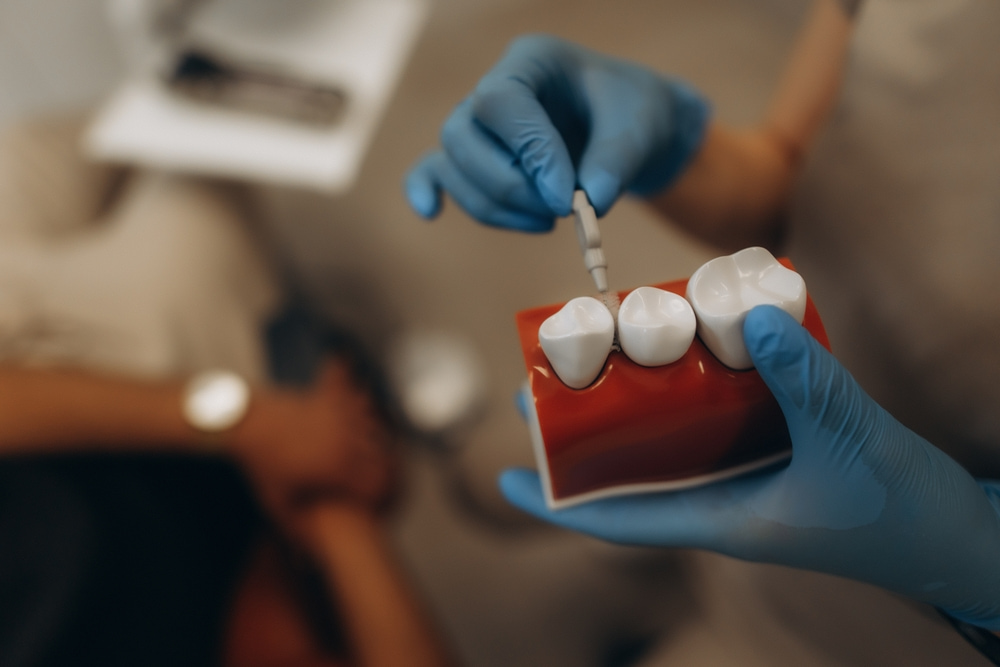
Dental implants are designed to feel secure, natural, and comfortable, but they still need thoughtful care once they become part of your daily routine. One concern patients sometimes notice after treatment is food getting stuck around an implant crown, bridge, or implant-supported restoration. This can feel frustrating, especially if you expected your implant to behave exactly like a natural tooth from the start.
Persistent food collection, bleeding, odor, discomfort, and gum irritation around the dental implant should not be ignored. These symptoms may point to an issue with the surrounding gum tissue, the shape of the restoration, or the way the implant area is being cleaned. Understanding what is normal and what deserves attention can help you protect your mini dental implants in Oceanside, maintain healthier gums, and know when it is time to call your dental team for guidance.
Can food get stuck around dental implants?
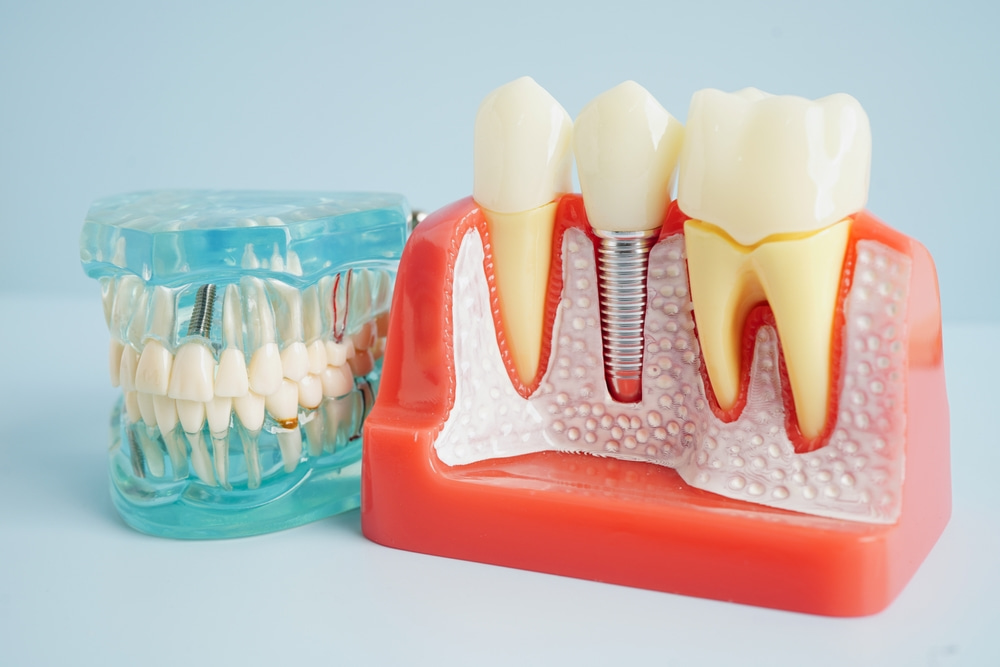
Yes, food can get stuck around dental implants, just as it can around natural teeth. While the implant itself replaces the missing tooth root, the visible crown, bridge, or implant-supported restoration still meets the gums and neighboring teeth in a way that can create small spaces where food particles collect.
Occasional food trapping is not always a problem, especially with fibrous, sticky, or seed-heavy foods. It may also feel more noticeable when an implant is new, and your mouth is still adjusting to the restoration. Implant bridges and full-arch restorations can also have spaces that require careful cleaning.
The main concern is frequency and discomfort. If food gets trapped once in a while and is easy to remove, it is usually manageable. If it happens every time you eat, causes soreness, creates a bad taste, or becomes difficult to clean, it should be checked. Dental implants cannot get cavities, but the gum and bone around them still need to stay healthy.
The best ways to clean around dental implants
Cleaning around dental implants should be gentle, consistent, and thorough. For a single implant crown, brushing twice a day with a soft-bristle toothbrush is usually the foundation. Clean along the gumline with light pressure, avoiding both aggressive scrubbing and overly quick brushing that leaves debris behind.
Flossing may also be part of your routine, but technique matters. Some patients can use traditional floss, while others may need implant-specific floss, floss threaders, interdental brushes, or soft picks. If the implant supports a bridge or larger restoration, special tools may be needed to clean underneath areas that a regular toothbrush cannot reach.
The right tool depends on the design of your implant restoration and the size of the spaces around it. A brush or pick that is too large can irritate the gums, while one that is too small may not clean effectively. Regular professional cleanings are also important because your dental team can remove buildup, check the tissue, and spot early signs of irritation before they become bigger problems.
Should you use a water flosser?
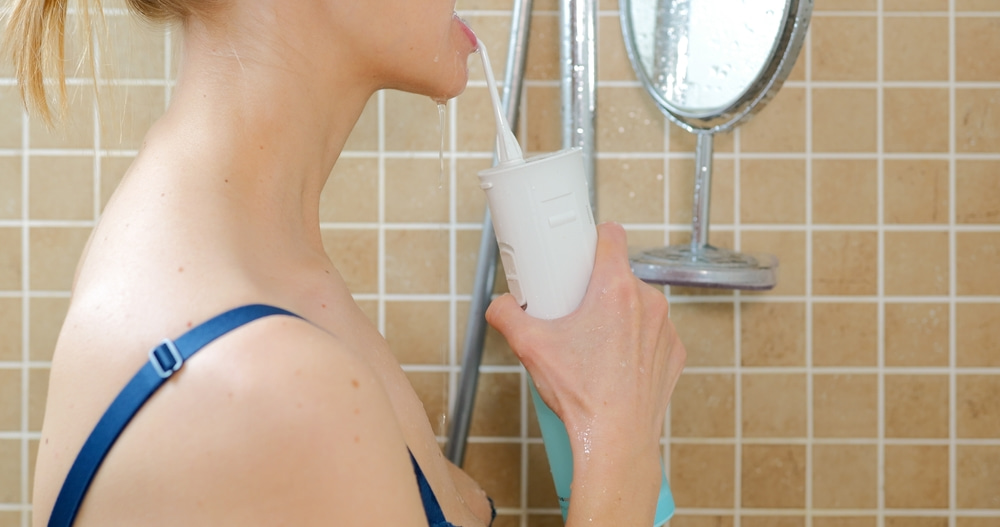 A water flosser for dental implants can be a helpful tool for most patients, especially when food collects around the implant area or the restoration is difficult to clean with standard floss. It uses a stream of water to flush debris from between teeth, along the gumline, and beneath certain implant-supported restorations.
Still, it should usually support your routine rather than replace brushing or other cleaning tools completely. Plaque can be sticky, so some areas may still need an implant-specific floss, threaders, soft picks, or interdental brushes. Technique also matters. Your dental team may recommend starting with a lower pressure setting and aiming the stream gently around the implant instead of directly into sensitive tissue.
If using a water flosser for dental implants causes ongoing bleeding, discomfort, swelling, or sensitivity, stop and contact your dentist. The best choice depends on your specific implant restoration, so personalized guidance is always safest.
When food trapping may signal a problem?
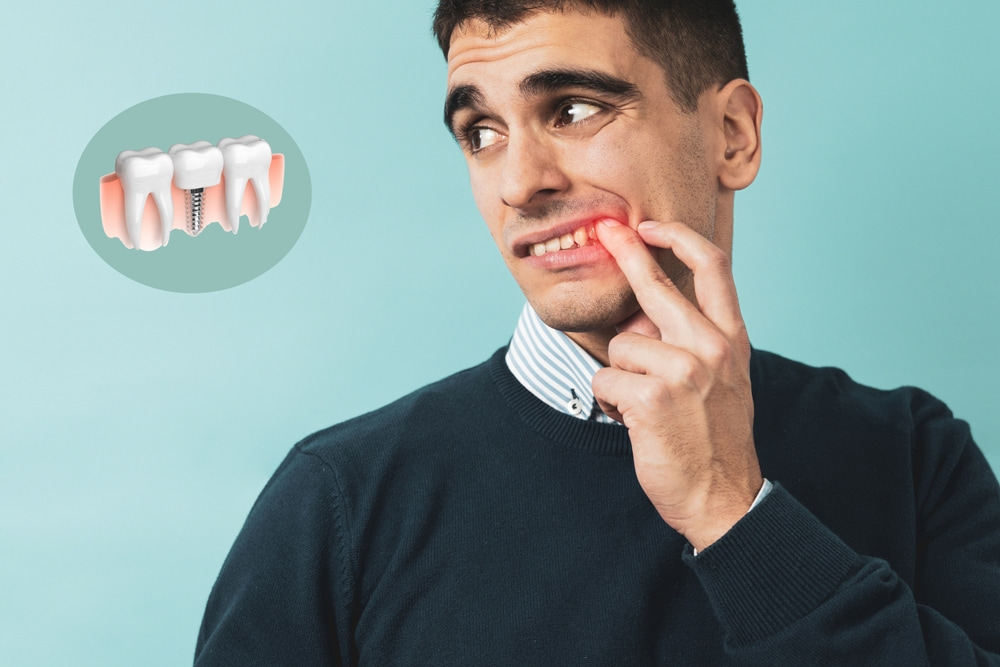
Food getting stuck around dental implants becomes more concerning when it happens often, feels painful, or comes with other symptoms. Occasional debris after a meal is usually manageable, but repeated trapping in the same spot may mean the area needs professional attention.
A few possible causes include:
- Dental implant open contact: A small gap between the implant crown and the neighboring tooth can allow food to wedge in easily.
- Crown shape or contour issues: If the restoration does not guide food away from the gumline properly, particles may collect around the base.
- Changes in the gum tissue: Gum recession or tissue changes can create pockets or ledges where food and plaque collect.
- Cleaning access problems: Some implant bridges or larger restorations may need special tools to clean underneath them properly.
You should contact your dentist if you notice:
- Bleeding around the dental implant when cleaning
- Swelling, tenderness, or soreness
- A bad taste or persistent bad breath
- Food getting stuck around dental implants during most meals
- Debris that is difficult to remove
- Gum recession around the implant
- A loose-feeling crown or discomfort when biting
These symptoms do not always mean the implant is failing. Sometimes the issue is related to the crown, gum tissue, bite, or cleaning access rather than the implant itself. Still, it is better to have the area checked early instead of trying to force food out with toothpicks or sharp tools. With the right adjustment, cleaning routine, or maintenance visit, many food-trapping problems can be managed before they become more serious.
Where can I find natural-looking mini dental implants in Oceanside, CA & the area?
 If food keeps getting trapped around your implant or cleaning feels harder than it should, it’s time to visit the best dental clinic in the North County area and beyond. At Temecula Center for Dental Implants, you’ll find a team of highly renowned professionals who can help you understand what is happening and how to care for the area around your implants properly.
We can guide you through the process of waiting for a final crown, help you deal with an implant that feels loose, and do everything in our power to provide you with lasting comfort, healthier gums, and restorations that fit naturally into daily life.
Whether you already have implants or are currently exploring your treatment options, schedule a visit today to our dental office to get practical answers, peace of mind, and trusted support so you can feel more confident caring for your smile every day. Contact us today!

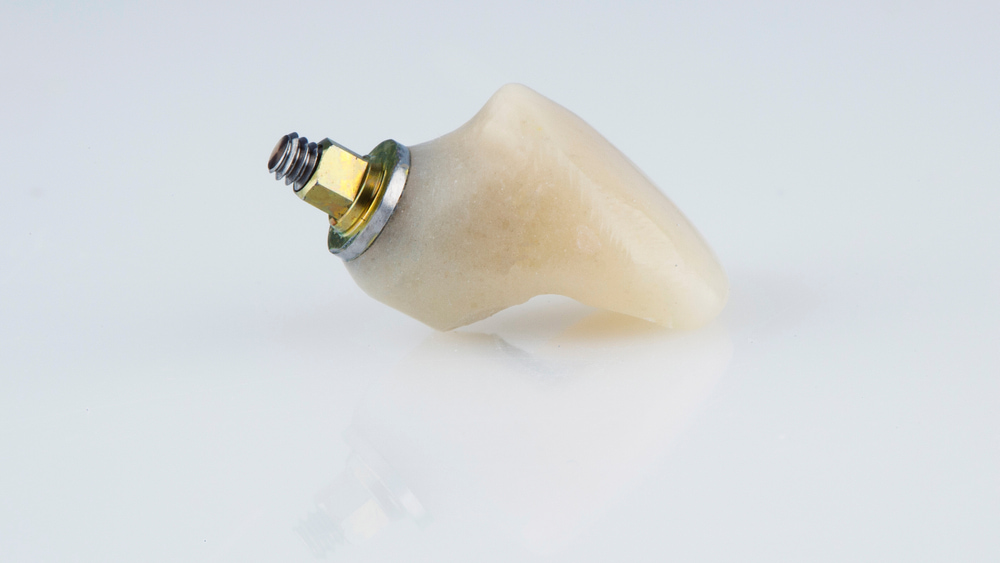 One of the most common concerns patients have is whether they will have to walk around with a missing tooth while they wait for the final crown after a dental implant. The answer depends on where the implant is located, your treatment plan, and the type of temporary restoration your dentist recommends.
 If you’re considering dental implants or waiting for the right time to begin treatment, Temecula Center for Dental Implants is your #1 choice in